As an onboarding UX design volunteer, my first assignment was to improve the UI to boost membership — a network of volunteers, project owners, community partners, and sponsors.
With the already well-established platform, Reinventing the UI from scratch or taking away any existing content is impractical from a business standpoint, especially within the time frame I was given.
Therefore, I planned to approach any pain points to be found at the structural level and prioritize moving elements around to use the space more strategically.
The redesign aimed at significant improvements in engagement by enhancing aesthetics, structure, and telling a compelling brand story without removing any existing content. Key features include streamlined navigation with consistent hero sections, a visually appealing interface, and a restructured homepage that effectively communicates the organization's mission and impact.
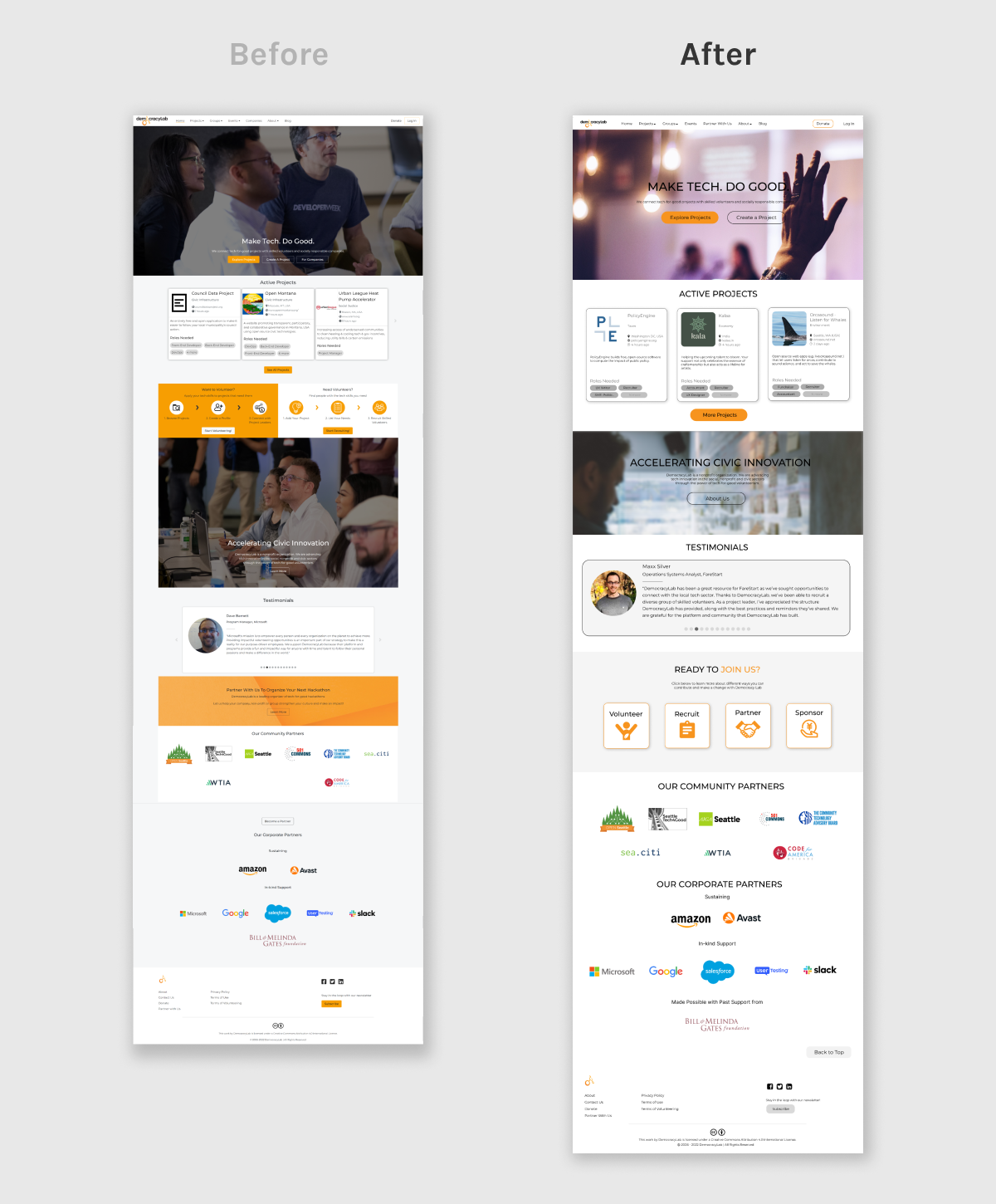


In pursuing this redesign project, I have spent a large chunk of time focusing on defining its scope to hand my client a realistic, market-ready prototype. On the surface, a redesign project feels like an opportunity to break free and start from scratch, yet, on a deeper level, it is about fine-tuning a skeleton (first and foremost) to have something that stays for as long as it can in the future. And I believe working through this project with this structural framework has helped me think more clearly and design more productively.
Through this case study, I learned the value of taking action and the importance of setting clear goals. While I initially struggled with overthinking and a lack of focus, completing this project has helped me develop a more streamlined approach to design. I'm excited to continue learning and improving my skills as I take on future challenges.